

"Dodgy data" behind push to expand native forest logging in Qld
A key tenet of the Crisafulli Government's draft 25-year Queensland Future Timber Plan has been thrown into question after analysis reveals no factual basis for its claim 32% of the average home is built with hardwood timbers.
The Plan draft states that on current estimates, the average amount of structural timber used in a traditional new one-to-two storey detached home is approximately 68% softwood and 32% hardwood timber. In Queensland, hardwood is sourced from native forests.
The Timber Plan source is a 2010 report but the report author has confirmed this report contains no reference to an industry average for hardwood structural timber components in Australian house construction.
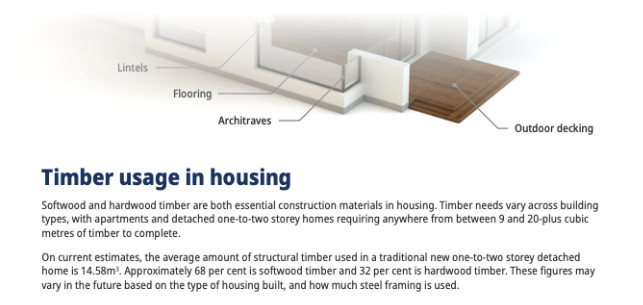 Source: Queensland Future Timber Plan 2050, copyright Queensland Government
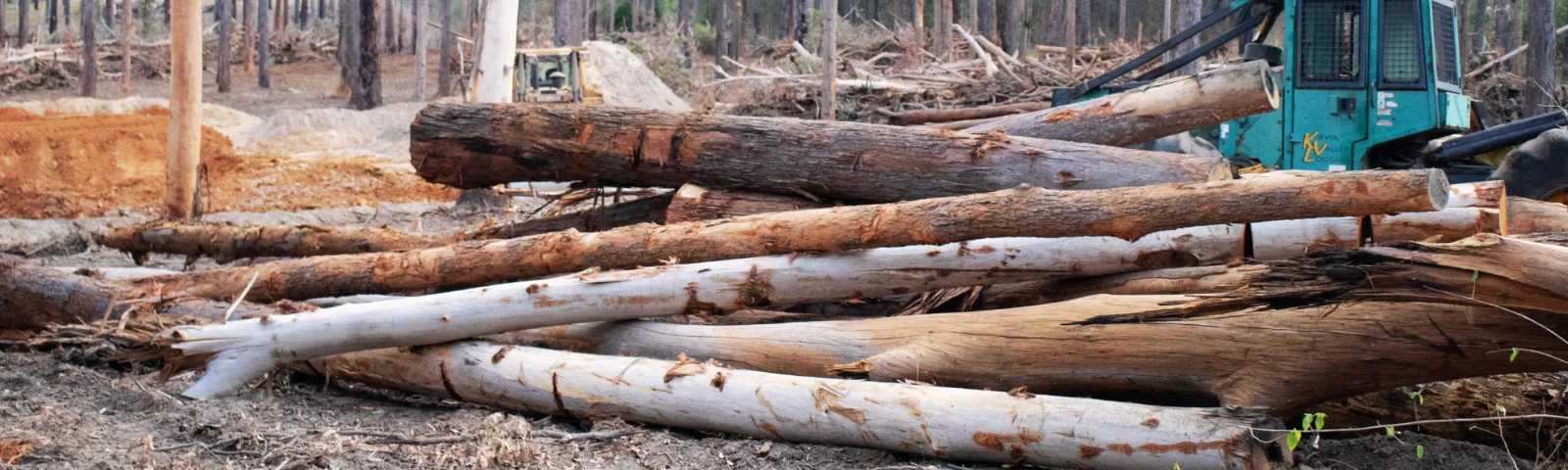
In fact, architects say hardwood is "hardly used at all" in modern building, yet the Crisafulli Government's Timber Plan aims to maximise hardwood logging of native forests, further threatening endangered greater gliders and other forest dependent threatened animals and plants.
RMIT University School of Property, Construction and Project Management course coordinator and report author Andrew Carre said
The report was never intended to justify a minimum hardwood requirement in residential construction.
The report was completed to better understand the life cycle environmental impacts of building a 'typical' Australian house design using different material combinations. The 'typical' house design was provided by the [Housing Industry Association] and the material quantities were selected based on construction practices at the time (circa 2010).
World leading expert in forest ecology and resource management Professor David Lindenmayer said
The amount of native timber in the average Australian house has declined by almost 90% in the past 20 years and is still declining. About 4% of native forest biomass ends up as sawn timber.
Other materials including plantation timber have displaced native forest hardwood in the average house.
Materials expert and life fellow of the Australian Institute of Architects, David Baggs said
With only a couple of notable exceptions, hardwood is hardly used at all in modern building techniques or products.
It’s hard to imagine the domestic housing industry reverting to the difficult to work hardwood framing or structural elements with all the softwood and steel alternatives available now. I doubt it would make sense commercially or practically any more given its numerous practical drawbacks.
Queensland Conservation Council Protected Areas Campaigner Nicky Moffat said
We are shocked that the Government's draft timber plan is based on flawed and unsupported data.
In reviewing the assumptions behind the plan to intensify logging in Queensland’s native forests, we could find no reliable evidence to support the claimed demand for hardwood in modern housing. Today’s homes are increasingly built with engineered structural products and plantation timber, not hardwood from native forests.
What is certain is the devastating impact of logging on threatened species that depend on native forests for survival. Greater gliders, koalas, and other wildlife cannot withstand further industrial logging.
Instead of propping up an outdated and damaging practice, the Government should reset the sector by investing in plantation expansion and innovative engineered wood products. Plantations already provide over 90% of Queensland’s sawn timber—growing this success will support regional jobs and deliver homes more efficiently.
The draft plan also ignores the 25-year-old 'cut and get out' agreement that signalled an end to native forest logging. Queensland’s forests are far more valuable for carbon storage, biodiversity recovery, and community benefit than for short-term timber extraction.
The Queensland Conservation Council has made an official submission to the draft Queensland Future Timber Plan (PDF 393k).
 Share
Share
 Tweet
Tweet
 Email
Email